loader image

ECOMORE Network

Economic developments, rapid demographic growth and climate change are deeply transforming Southeast Asia’s natural ecosystems, leading to the emergence or re-emergence of infectious diseases, many of which are of animal origin (zoonotic diseases). In this context, the ECOMORE project, funded by the Agence Francaise de Développement (AFD) in 2013, aims to study the impact of climate change and human activity on infectious diseases (such as vector-borne diseases, waterborne diseases), following a One Health approach. It seeks to better understand ecological and climatic mechanisms as well as risk factors to strengthen surveillance systems and provide appropriate public health recommendations.


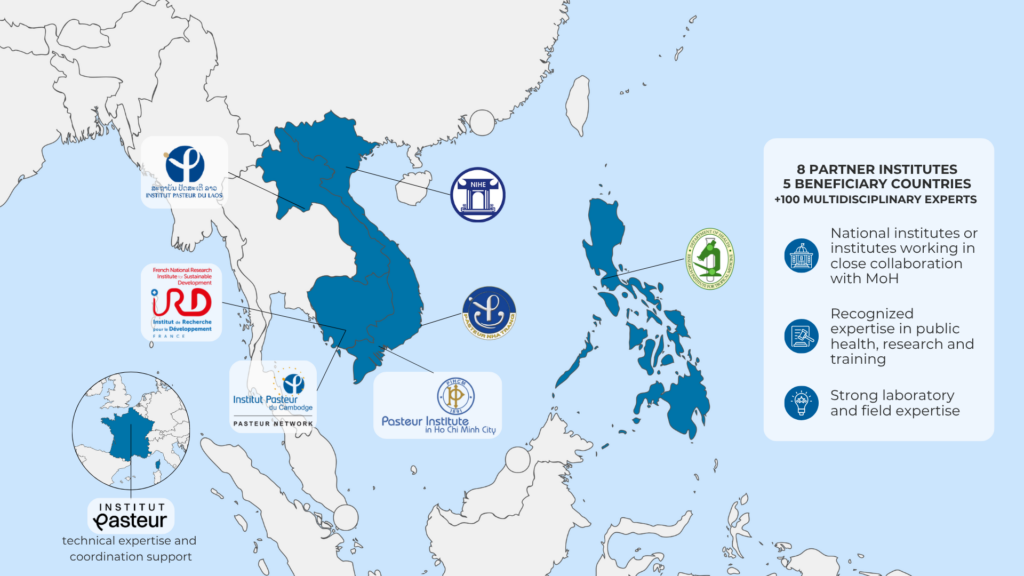
Funded by AFD, it is currently coordinated by the Institut Pasteur (Paris) in collaboration with the Institut Pasteur du Cambodge (IPC), the Institut Pasteur du Laos (IPL),  the National Institute of Hygiene and Epidemiology (NIHE), the Pasteur Institute in Nha Trang (PINT) and the Pasteur Institute in Ho Chi Minh City (PIHCMC), in Vietnam, as well as the Research Institute for Tropical Medicine (RITM) in the Philippines, and the French Research Institute for Development (IRD). ECOMORE project progressively expanded its group of partners to include other national research and public health institutions, in order to structure scientific and operational collaborations among the targeted countries in the Southeast Asia, leading to a One Health network of expertise and organization in the region.

The first two phases of the project, ECOMORE 1 and ECOMORE 2, played a key role in bringing together national institution teams and developing regional multidisciplinary expertise with the aim of better understanding the ecological and climatic mechanisms, strengthening surveillance systems, and producing public health recommendations tailored to local contexts. Throughout the project, the partners collaborated effectively through cross-cutting knowledge transfer platforms. This cross-cutting approach encouraged the sharing of information and lessons learned, while knowledge transfer fostered trust between researchers and public decision-makers for the project’s sustainable implementation. ECOMORE is now a well-established regional scientific network composed of multidisciplinary scientific experts.

The first phase laid the foundations for this collaboration by strengthening partners’ technical capacities and fostering regular exchanges between laboratories and field teams. During this initial phase, the partner organizations primarily carried out specific activities tailored to their national priorities and contexts, while also beginning to share methods and lessons learned at the regional level.

  • In Cambodia, ECOMORE strengthened national dengue surveillance by expanding the network of sentinel hospitals and developing an early warning system for vectors.
  • In Lao PDR, the project reassessed the risks of contracting infectious diseases based on vector populations and environmental factors. The technical reference manual for Laotian Hevea’s plantation owners has been updated to add a chapter on workers’ health.
  • In Vietnam, epidemiological investigations revealed significant circulation of hepatitis E and leptospirosis in intensive livestock farming areas.
  • In Myanmar, ECOMORE initiated a collaboration with the National Health Laboratory (NHL) and two pediatric hospitals in Yangon to improve the diagnosis of acute respiratory infections.

This first phase highlighted the need to establish a knowledge-sharing platform to encourage authorities and future users to adopt the study results, thus better ensuring that the recommendations are implemented.

The second phase of ECOMORE built on the achievements of ECOMORE 1 to establish a regional framework centered on two main scientific themes – dengue and leptospirosis, respectively vector-borne and waterborne diseases and focus on climate and the environment.

  • In Cambodia, ECOMORE contributed to establish a sustainable medical entomology unit of Institut Pasteur du Cambodge, enabling the project to conduct entomological studies. Indeed, ECOMORE targeted schools in peri-urban settings for an integrated vector control program: destruction of breeding sites, larvicides, In2Care® traps, and awareness campaigns about dengue and its vectors. Serological surveillance of dengue-like syndrome was established in collaboration with health centers.
  • In Lao PDR, ECOMORE studied the dynamics of Aedes mosquito vectors in urban areas using autodissemination methods.
  • Entomological studies in Lao PDR and Cambodia demonstrated the effectiveness of a variety of strategies for controlling Aedes mosquitoes and highlighted their resistance to certain traditional insecticides.
  • In the Philippines, ECOMORE initiated a collaboration to conduct a test to evaluate the effectiveness of mosquito trap “In2Care®”.
  • In Vietnam, studies revealed a high prevalence of leptospirosis, particularly among pets and livestock, underscoring the importance of animal vaccination and hygiene practices to prevent infection.
  • In Myanmar, the National Health Laboratory has confirmed a high prevalence of leptospirosis in the Yangon region compared to India or Vietnam. Efforts have been made to train healthcare workers in new diagnostic techniques. The Yangon Veterinary Diagnostic Laboratory has also conducted surveillance among dogs, given their role in transmitting disease to humans.

Climate change as a catalyst for these epidemics? 

In response to the need for information and research on the impacts of climate change, ECOMORE 2 has implemented a regional transversal component to assess the consequences of climate change on public health through 2100. Models based on satellite and epidemiological data were developed for the project’s partner countries and integrated into a dedicated web platform. The models predict a significant rise in the populations of both mosquito species in Southeast Asia due to global warming.

Throughout the project, the partners collaborated effectively through cross-cutting knowledge transfer platforms. This cross-cutting approach encouraged the sharing of information and lessons learned, while knowledge transfer fostered trust between researchers and public decision-makers for the project’s sustainable implementation. ECOMORE is now a well-established regional scientific network composed of multidisciplinary scientific experts.
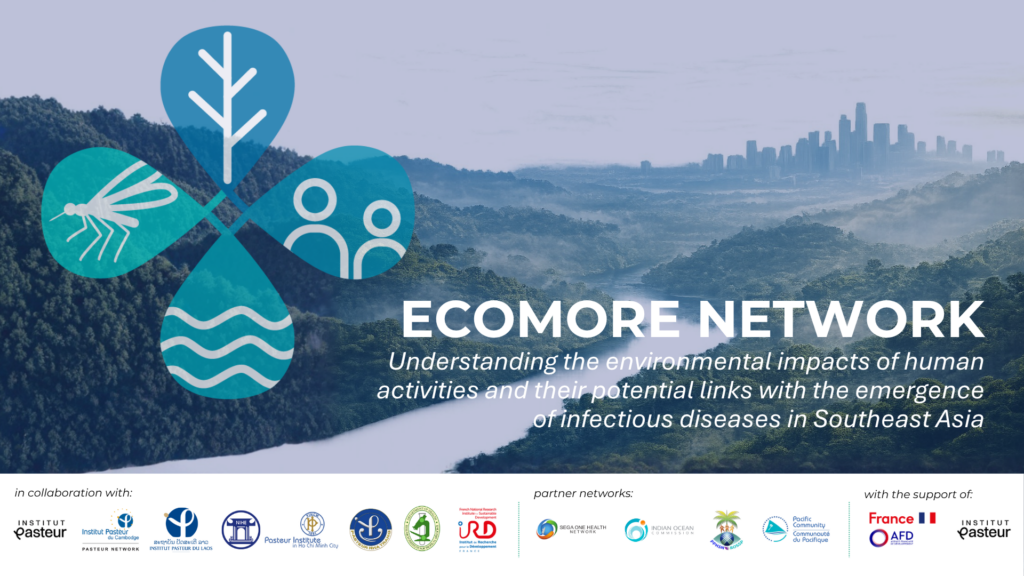
A better understanding of the transmission of diseases carried by animals or vectors by integrating climate data

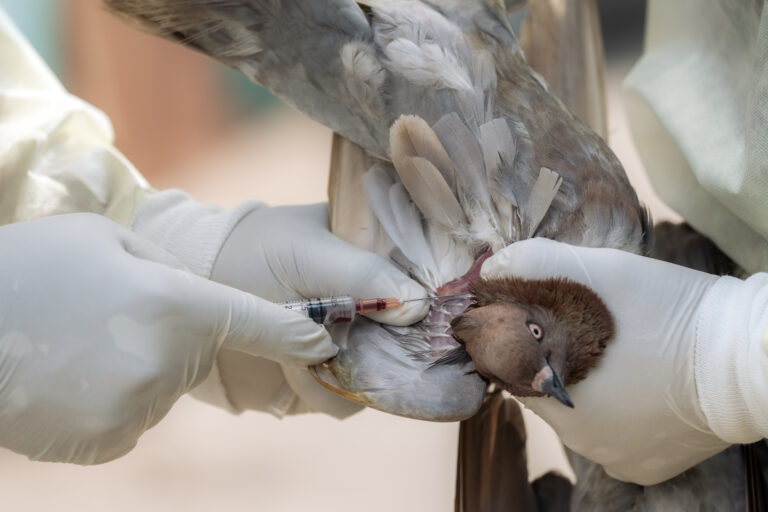
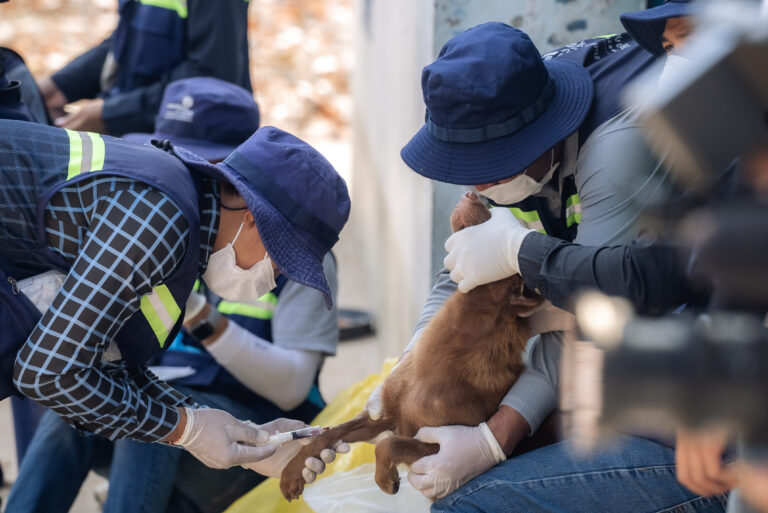
Based on a decade of activities and collaborations, the ECOMORE network aims, today, to reinforce preparedness and response against emerging infectious diseases, by studying the circulation of top priority diseases in humans mainly transmitted by animals and/or insects (vectors), following a “One Health” approach. ECOMORE seeks to implement large scale national serosurveys, to develop and mobilize innovative diagnostic methods, and to identify vectors and key reservoirs while integrating environmental and climatic data to better understand transmission dynamics of aimed pathogens.


Beyond the strengthening of capacities and collaborations on a regional scale between partner institutes, this One Health project produces knowledge to formulate human and animal health recommendations, by building One Health collections of common scientific interest and multisectoral databases.


These data are crucial in providing national health authorities with relevant information on the burden of disease and transmission dynamics of pathogens in their countries and thus facilitate a targeted approach to implement public health interventions in a timely manner. Taken together, these data will enhance the region’s ability to mitigate the impact of priority infectious diseases and support long-term public health planning.

To achieve these objectives, ECOMORE activities are structured around four strategic pillars, each supported by dedicated work packages addressing key aspects of laboratory capacity strengthening, climate and environmental surveillance, integrated surveillance systems, and public health response:

Objective: Strengthen the biological diagnostic capabilities and quality assurance of laboratories involved in integrated surveillance by developing cutting-edge diagnostic tools

  • WP1: Development of Serological Diagnostic Tools
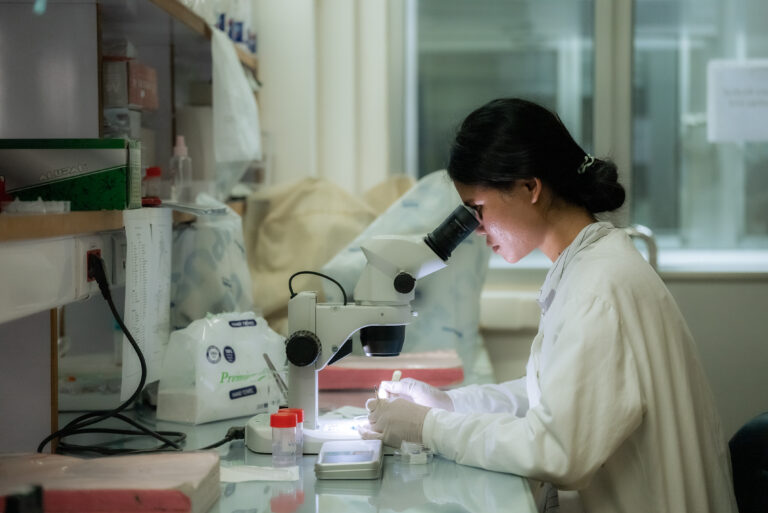
  • WP2: Development of Molecular Diagnostic Tools
  • WP3: Assessment of Laboratory-Based Surveillance System in Vietnam

Objective: Focus on characterizing climate and environmental changes in the short term (detection and spatiotemporal monitoring of anomalies) so that they can be considered in a more operational way for health surveillance.

  • WP4: Climatic and Environmental Factors for Health Surveillance

Objective: Strengthen the One Health approach in the surveillance of infectious diseases, incorporating a multi-faceted strategy that includes serological surveys, and entomology studies.

  • WP5: National OH Serosurveys
  • WP6: Mosquito Investigation
  • WP7: Ticks and Fleas Investigation in Vietnam

Objective: Work hand-in-hand with national health authorities to co-develop evidence-based public health recommendations

  • WP8: Knowledge Translation

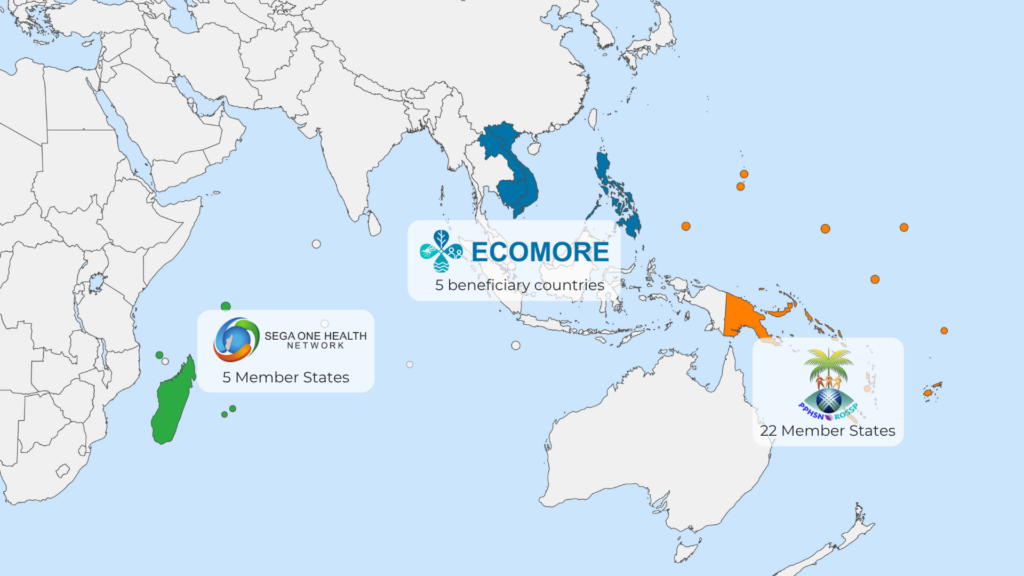
Reinforced health security across the Indo-Pacific thanks to a collaboration between 3 regional public health networks

The Indo-Pacific scale is particularly relevant for operationalizing the One Health approach in light of the acute health and climate threats in the region.

Currently embedded in a larger project called “Health Security Strengthening in the Indo-Pacific Region Project” (SSIP Project), ECOMORE network has now the opportunity to collaborate with two regional surveillance networks well-established in the Indo-Pacific:

This inter-regional collaboration aims to strengthen integrated approaches to human, animal, and environmental health and establish a framework for inter-network cooperation on epidemic preparedness and response covering the Indo-Pacific area. This framework for collaboration is built around the same strategic pillars underpinning ECOMORE’s core activities in Southeast Asia, fostering coordinated approaches and transversal exchanges across laboratory capacities, climate and environmental health, surveillance, and response activities throughout the Indo-Pacific region.

Together, they promote:

  1. The establishment of transversal technical working group
  2. Knowledge sharing and lessons learned among network stakeholders.
  3. Advocacy on One Health approach and interdisciplinary collaborations.

With the support of:

Partners

Partner networks:

Contact us

For more information about the SSIP Project and ECOMORE Network or to inquire about collaboration opportunities, please contact: Emilie Carlot, ECOMORE Regional Coordinator, [email protected].


Follow our news on our Linkedin page.