

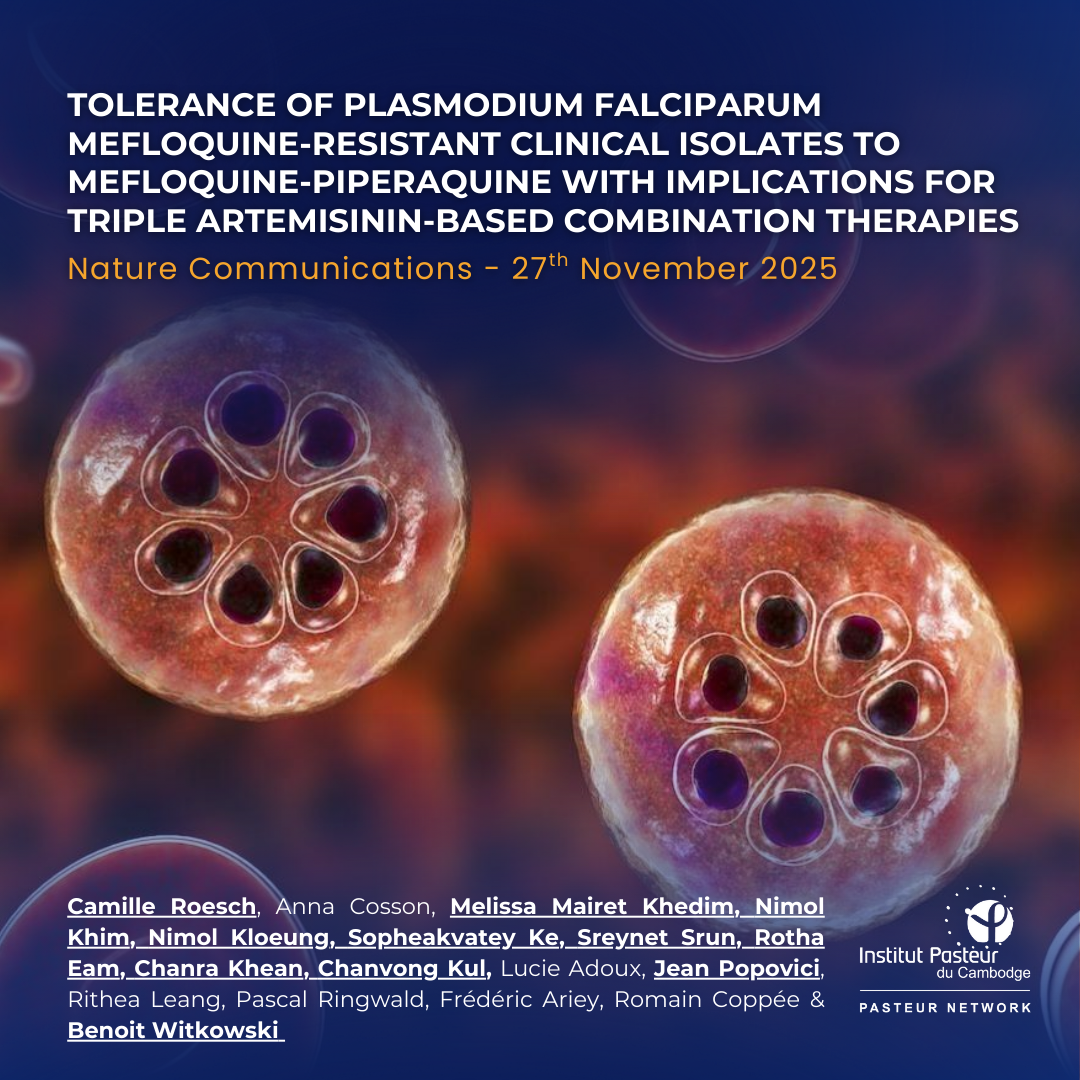
Rethinking Triple Artemisinin-based Therapies against Plasmodium falciparum
A study published in Nature Communications shows that clinical P. falciparum isolates from Cambodia with resistance to the antimalarial drug mefloquine also tolerate the mefloquine-piperaquine combination, one of the backbone regimens proposed in triple artemisinin-based therapies (TACTs). The team found that pre-existing mefloquine resistance alone was enough to compromise the efficacy of this partner-drug combo and that parasites subjected to repeated combination drug pressure quickly developed increased tolerance driven by amplification of the resistance-associated gene pfmdr1. Mechanistic work revealed that mefloquine can reduce intracellular accumulation of piperaquine, explaining why the combination may underperform when mefloquine resistance is already present. These results suggest that some TACT formulations, despite theoretical advantages, may have limited long-term value in regions where drug resistance is established, and highlight the urgency to reevaluate drug rotation and partner drug selection strategies
Read article: https://www.nature.com/articles/s41467-025-65629-8