
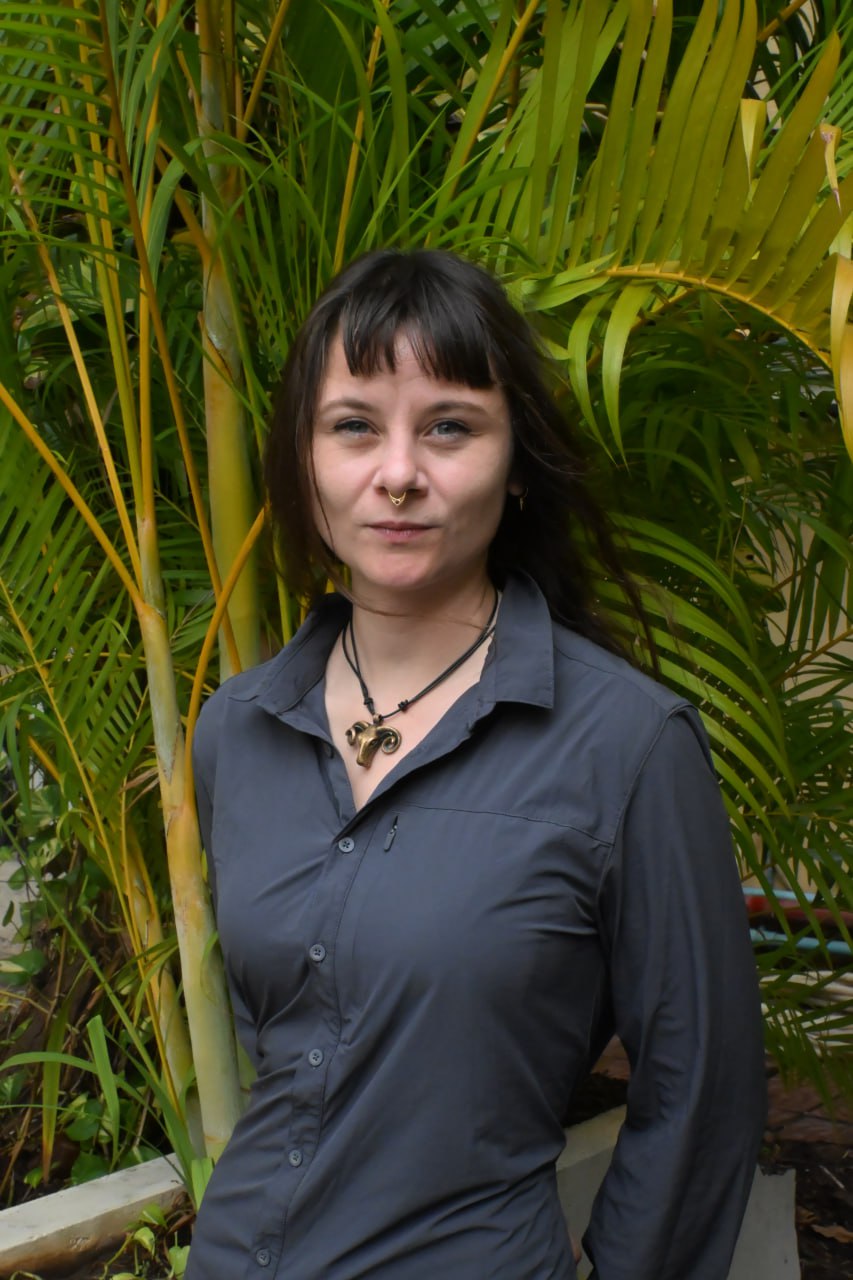
𝐂𝐞𝐥𝐞𝐛𝐫𝐚𝐭𝐢𝐧𝐠 𝐖𝐨𝐦𝐞𝐧 𝐢𝐧 𝐒𝐜𝐢𝐞𝐧𝐜𝐞 𝐚𝐭 𝐈𝐧𝐬𝐭𝐢𝐭𝐮𝐭 𝐏𝐚𝐬𝐭𝐞𝐮𝐫 𝐝𝐮 𝐂𝐚𝐦𝐛𝐨𝐝𝐠𝐞: 𝐀𝐧𝐧𝐚 𝐅𝐎𝐌𝐒𝐆𝐀𝐀𝐑𝐃, 𝐏𝐨𝐬𝐭𝐝𝐨𝐜 𝐕𝐢𝐫𝐨𝐥𝐨𝐠𝐲 𝐔𝐧𝐢𝐭
𝟏. 𝐖𝐡𝐢𝐜𝐡 𝐰𝐨𝐦𝐚𝐧 𝐬𝐜𝐢𝐞𝐧𝐭𝐢𝐬𝐭 𝐨𝐫 𝐧𝐨𝐧-𝐬𝐜𝐢𝐞𝐧𝐭𝐢𝐬𝐭 𝐢𝐧𝐬𝐩𝐢𝐫𝐞𝐬 𝐲𝐨𝐮 𝐭𝐡𝐞 𝐦𝐨𝐬𝐭, 𝐚𝐧𝐝 𝐰𝐡𝐲?
There are many. But last year we lost Jane Goodall. She went to the heart of Africa in the 1960s, to study chimpanzees despite being told “girls don’t do things like that”. She followed her passion, stayed focused, and made a lasting impact her whole life. Françoise Barré-Sinoussi, one of the world’s top virologists and Nobel prize winner, also comes to mind when she visited IPC in 2024 and we had a talk about science and family. That act of kindness and taking the time in a busy world inspires me to this day.
𝟐. 𝐖𝐡𝐚𝐭 𝐟𝐢𝐫𝐬𝐭 𝐦𝐨𝐭𝐢𝐯𝐚𝐭𝐞𝐝 𝐲𝐨𝐮 𝐭𝐨 𝐩𝐮𝐫𝐬𝐮𝐞 𝐚 𝐜𝐚𝐫𝐞𝐞𝐫 𝐢𝐧 𝐬𝐜𝐢𝐞𝐧𝐜𝐞 (𝐨𝐫 𝐲𝐨𝐮𝐫 𝐜𝐮𝐫𝐫𝐞𝐧𝐭 𝐟𝐢𝐞𝐥𝐝)?
Fifteen years ago, I stumbled upon a bird being eaten alive by these beautiful blue beetles. The moment sparked a need to understand the natural world; fascinating, brutal, and complex. That curiosity led me to study biology at the University of Copenhagen and gradually move from beetles to viruses. I couldn’t save that one bird, but working with zoonotic viruses feels like contributing on a larger scale.
𝟑. 𝐖𝐡𝐚𝐭 𝐚𝐝𝐯𝐢𝐜𝐞 𝐰𝐨𝐮𝐥𝐝 𝐲𝐨𝐮 𝐠𝐢𝐯𝐞 𝐭𝐨 𝐚 𝐲𝐨𝐮𝐧𝐠 𝐰𝐨𝐦𝐚𝐧 𝐰𝐡𝐨 𝐰𝐚𝐧𝐭𝐬 𝐭𝐨 𝐩𝐮𝐫𝐬𝐮𝐞 𝐚 𝐜𝐚𝐫𝐞𝐞𝐫 𝐢𝐧 𝐬𝐜𝐢𝐞𝐧𝐜𝐞 𝐭𝐨𝐝𝐚𝐲?
I found it comforting to realize early on that not knowing is okay. Curiosity often pushes me outside my comfort zone, and that’s usually where I learn the most. So I’ll advice to not hold back on yourself and ask out loud.
𝟒.𝐇𝐚𝐯𝐞 𝐲𝐨𝐮 𝐟𝐚𝐜𝐞𝐝 𝐬𝐩𝐞𝐜𝐢𝐟𝐢𝐜 𝐜𝐡𝐚𝐥𝐥𝐞𝐧𝐠𝐞𝐬 𝐚𝐬 𝐚 𝐰𝐨𝐦𝐚𝐧 𝐢𝐧 𝐬𝐜𝐢𝐞𝐧𝐜𝐞? 𝐇𝐚𝐯𝐞 𝐭𝐡𝐞𝐫𝐞 𝐚𝐥𝐬𝐨 𝐛𝐞𝐞𝐧 𝐬𝐭𝐫𝐞𝐧𝐠𝐭𝐡𝐬 𝐨𝐫 𝐚𝐝𝐯𝐚𝐧𝐭𝐚𝐠𝐞𝐬 𝐥𝐢𝐧𝐤𝐞𝐝 𝐭𝐨 𝐛𝐞𝐢𝐧𝐠 𝐚 𝐰𝐨𝐦𝐚𝐧 𝐢𝐧 𝐲𝐨𝐮𝐫 𝐟𝐢𝐞𝐥𝐝?
I feel fortunate that I haven’t experienced direct professional advantages or disadvantages as a woman, although I know this is not the case for many others in science. I appreciate that success in research is driven by talent and personality rather than gender. At the same time, STEM is still male-dominated, so the growing visibility of women in science and support feels like a positive and important shift.
𝟓. 𝐇𝐨𝐰 𝐝𝐨 𝐲𝐨𝐮 𝐭𝐫𝐲 𝐭𝐨 𝐢𝐧𝐬𝐩𝐢𝐫𝐞 𝐨𝐫 𝐬𝐮𝐩𝐩𝐨𝐫𝐭 𝐨𝐭𝐡𝐞𝐫 𝐰𝐨𝐦𝐞𝐧 𝐚𝐫𝐨𝐮𝐧𝐝 𝐲𝐨𝐮, 𝐞𝐬𝐩𝐞𝐜𝐢𝐚𝐥𝐥𝐲 𝐲𝐨𝐮𝐧𝐠𝐞𝐫 𝐠𝐞𝐧𝐞𝐫𝐚𝐭𝐢𝐨𝐧𝐬?
I try to support others by being open and willing to share experiences when it might be helpful. I believe mentorship are essential in science, which is why I would also like to highlight the Women for One Health Network and their work supporting women and other under-served groups in research.