
A Multidisciplinary Approach to Dengue Research and Surveillance at IPC
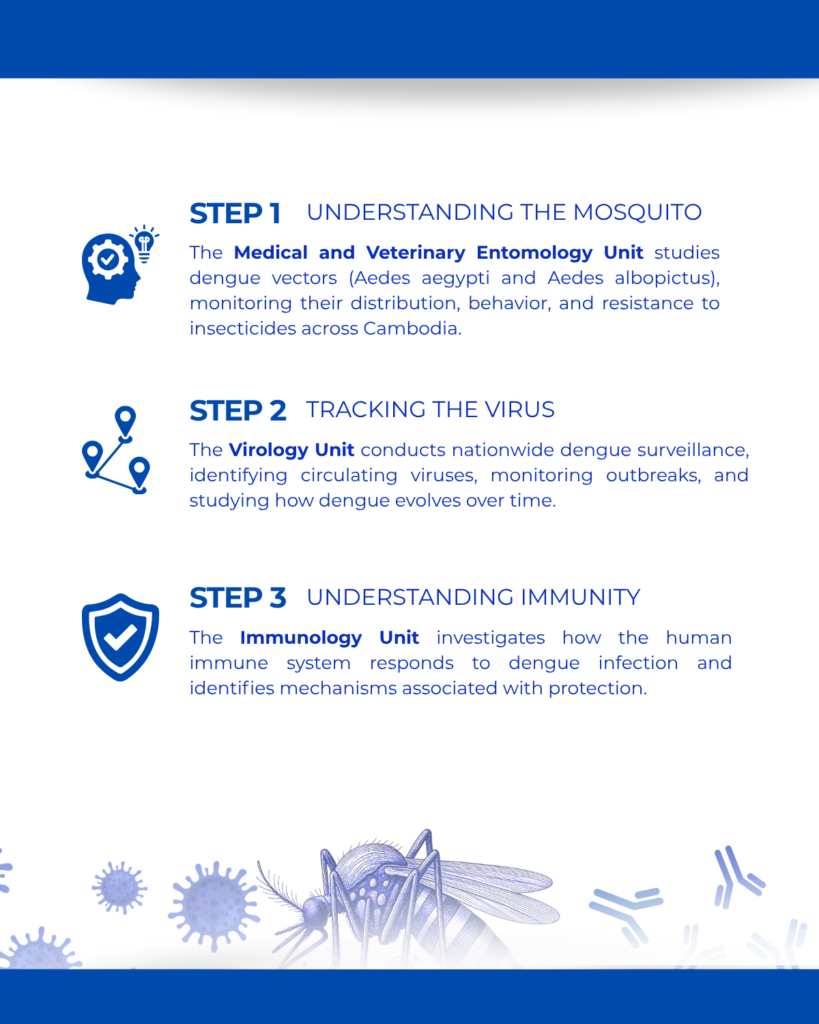
IPC tackles dengue through the complementary expertise and strong synergy of its Medical and Veterinary Entomology, Virology, and Immunology Units, combining vector research, disease surveillance, diagnostics, genomics, and immune-response studies to strengthen dengue preparedness and public health strategies in Cambodia and the region.
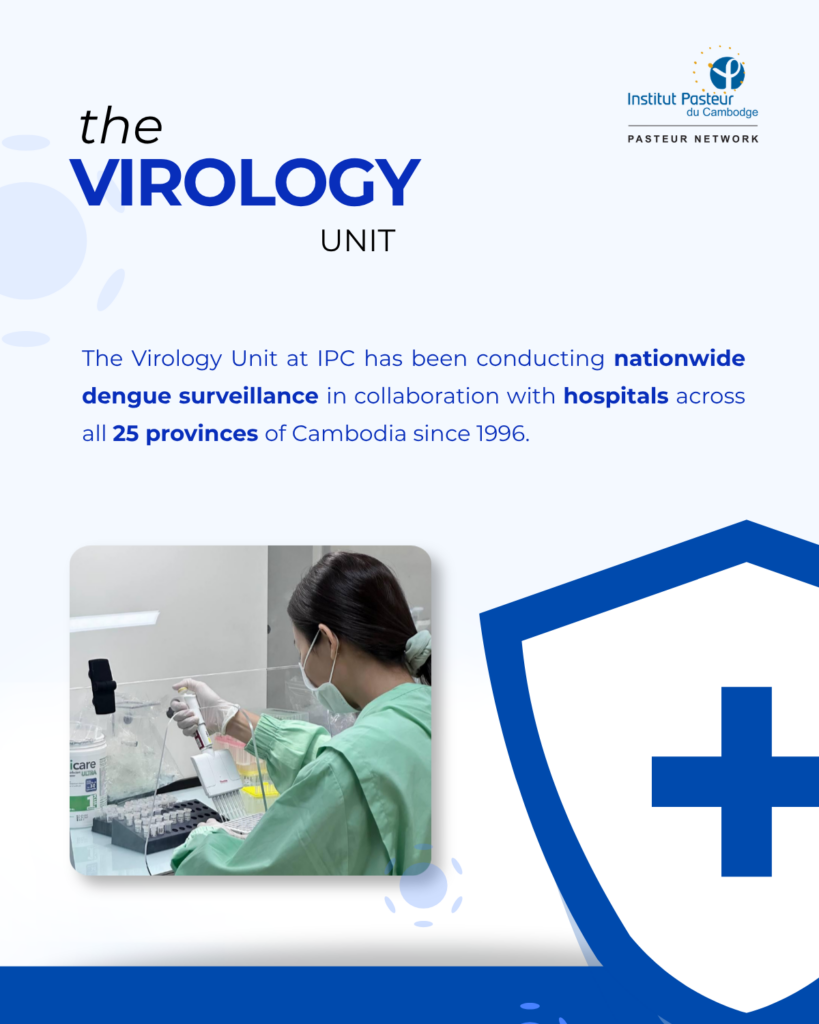
The Virology Unit at IPC has been conducting dengue surveillance since 1996, in close collaboration with hospitals across all 25 provinces of Cambodia. Its work includes nationwide dengue diagnostics and surveillance, virus isolation, and whole-genome sequencing for genetic and phylogenetic analysis of circulating dengue strains. The unit also conducts immunological studies to distinguish between primary and secondary dengue infections. Through long-term surveillance and the use of advanced molecular and immunological tools, the unit strengthens dengue surveillance, diagnostics, and research, contributing to the early detection and understanding of dengue virus evolution and supporting evidence-based public health preparedness and control strategies in Cambodia and beyond.
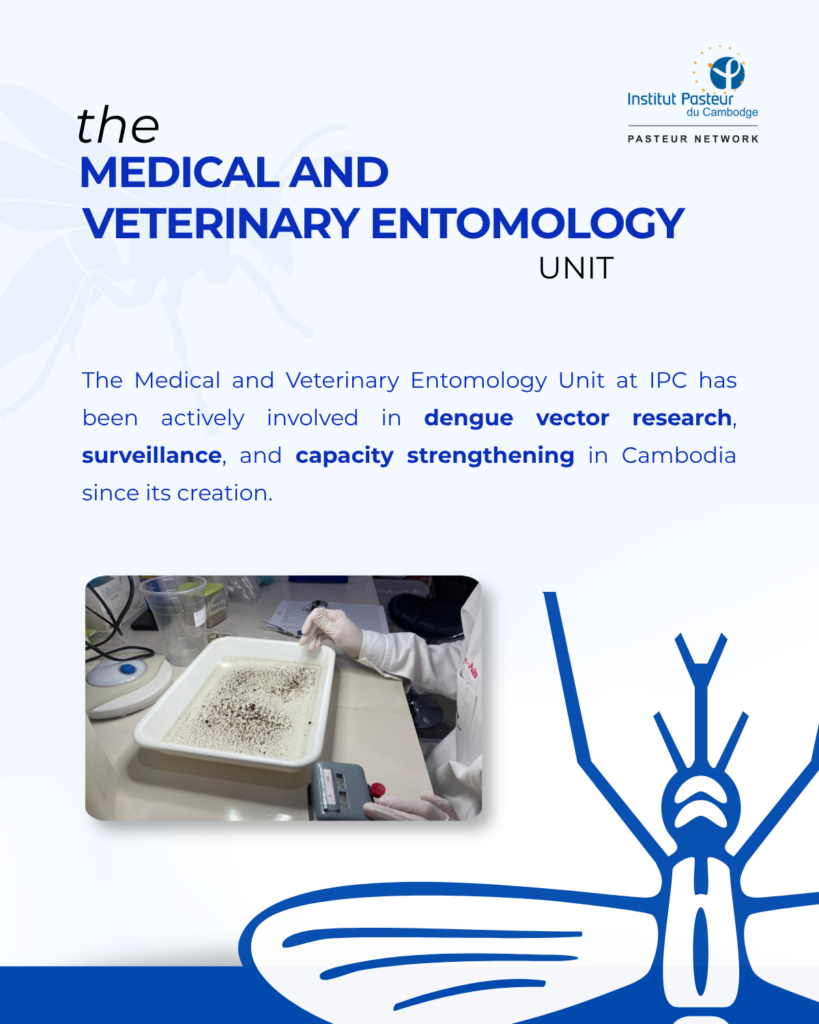
The Medical and Veterinary Entomology Unit at IPC has been actively involved in dengue vector research, surveillance, and capacity strengthening in Cambodia for many years, since its creation. Its work focuses on the ecology, distribution, behavior, insecticide resistance, and evolution of dengue vectors, particularly Aedes aegypti and Aedes albopictus. Through long-term surveillance in urban, rural, peri-urban, and forested environments, innovative mosquito identification approaches, and international scientific collaborations, the unit contributes to strengthening vector surveillance, dengue preparedness, and evidence-based public health strategies in Cambodia and the region.
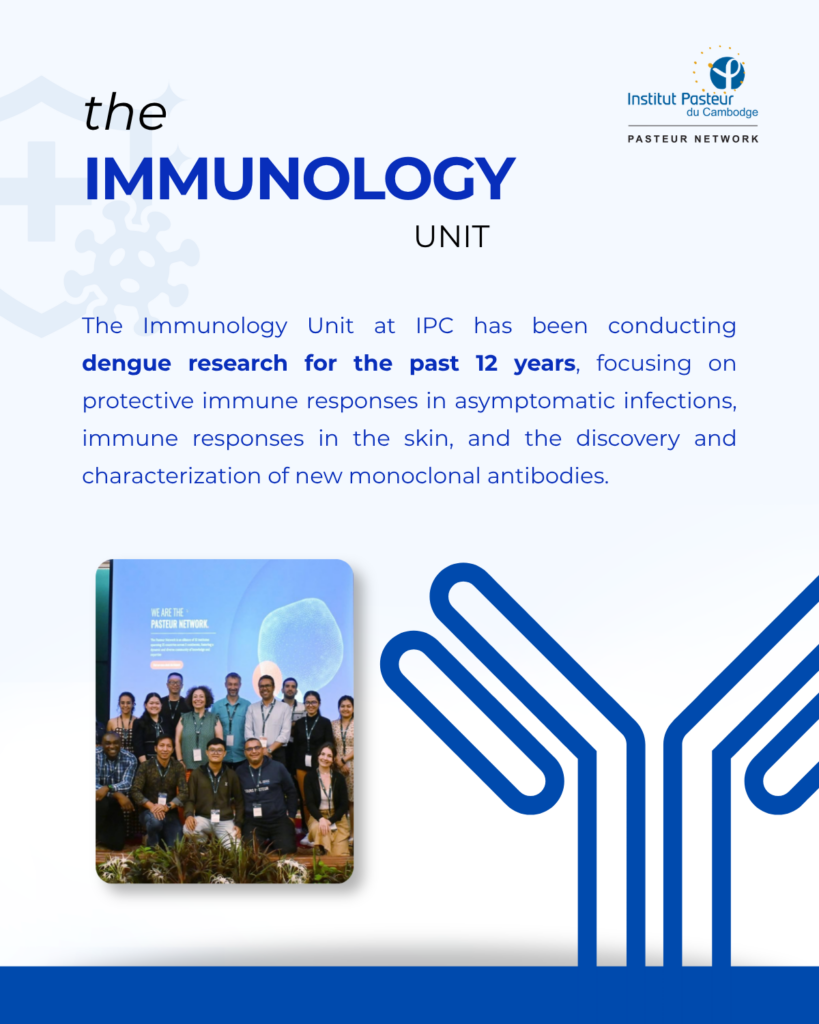
The Immunology Unit at IPC has conducted dengue research for the past 12 years. The unit focuses on understanding the mechanisms of protective immune responses in asymptomatic infected cases, the immune response to dengue in the skin, and the discovery and characterization of new monoclonal antibodies. With an international team and state-of-the-art methodologies, the unit aims to identify novel biomarkers of protection, explore new treatment options, and improve future vaccine design for dengue.